ChevyParts
My Garage
My Account
Cart
OEM Chevrolet Venture Brake Master Cylinder
- Select Vehicle by Model
- Select Vehicle by VIN
Select Vehicle by Model
orMake
Model
Year
Select Vehicle by VIN
For the most accurate results, select vehicle by your VIN (Vehicle Identification Number).
3 Brake Master Cylinders found
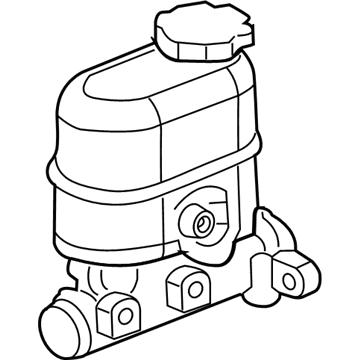
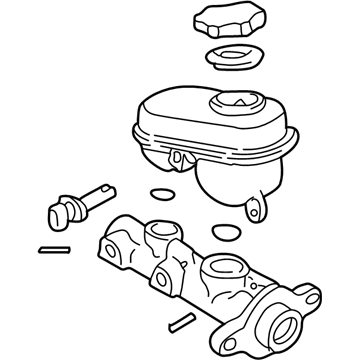
Chevrolet Venture Master Cylinder Part Number: 18023761
$37.78 MSRP: $72.66You Save: $34.88 (48%)Ships in 1-2 Business Days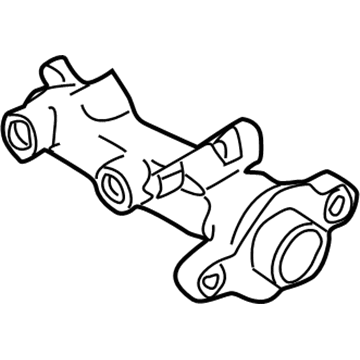
Chevrolet Venture Master Cylinder Part Number: 18022002
Chevrolet Venture Master Cylinder Part Number: 19209260
Chevrolet Venture Brake Master Cylinder
Want to cut long-term maintenance and repair costs? Choose OEM Brake Master Cylinder. Those parts deliver top durability you can trust. On our site, you'll find a huge catalog of genuine Chevrolet Venture parts. Prices are unbeatable, so you can keep more in your pocket. Every OEM Chevrolet Venture Brake Master Cylinder includes a manufacturer's warranty. You can also get an easy return policy that keeps buying risk free. Fast delivery, get your car on the road quickly. It's simple to search, compare, and order. Stop guessing about quality or fit. Order today and save with parts that last.
I understand Chevrolet Venture Brake Master Cylinder is one of the basic parts learnt in class that exemplifies the efficiency and effectiveness of the Chevrolet Venture minivan manufactured between 1997 and 2005. The position of this Brake Master Cylinder is to translate the pressure exerted by the foot of the driver into hydraulic pressure to ensure that the brakes perform to the prime ability. The Chevrolet Venture models have dual circuit brake master cylinders which makes the braking to still be effective if one of the circuits have failed. This feature especially comes in handy during emergencies, in this case showing that Chevrolet Venture cares about the safety of drivers. Brake Master Cylinder is made of sturdy material such as cast iron or aluminum and intricate parts such as pistons and seals added to the brake master cylinder as they are important in increasing the life span of the cylinder. Brake Master Cylinder should also be inspected frequently; frequent problems that one is likely to encounter include leaking of fluid and this would harm braking power. Chevrolet Venture has four models known as the Base, LS, LT, and it is noted to have features such as four speed automatic transmission and eight seaters. A robust Galvanized steel frame and impact-resistant panels are added on its design to increase the product's dependability. For instance the Chevrolet Venture Brake Master Cylinder is pivotal to the channel of braking of this automobile apart from this the Chevrolet Venture Brake Master Cylinder is distinctive in the automotive market due to the sound engineering and safety standards that has been installed in the Chevrolet Venture hence boosting its performance and smooth operation.
Chevrolet Venture Brake Master Cylinder Parts and Q&A
- Q: How to replace the brake master cylinder on Chevrolet Venture?A:To change the Brake Master Cylinder you must disconnect its sensor electrical connector and brake pipes first. Install rubber caps as fluid plugs to seal each brake pipe end after disconnection to avoid leaks and prevent contamination. Start by replacing the brake pipe plugs then loosening and removing master cylinder mounting nuts. Take the master cylinder out including its fluid drain from the reservoir. Prior to attaching the Brake Booster install the master cylinder on a bench stand and complete the bleed procedure. Afterwards secure the master cylinder mounting nuts with 29 nm (21 ft. Lbs.) torque values. Secure the brake pipes to the master cylinder and fasten the fittings at 32 nm torque setting (24 ft. Lbs.). Close the electrical connection to the Brake Fluid Level Sensor then depress the brake pedal to remove all air from the brake system.
- Q: How to overhaul the brake master cylinder on Chevrolet Venture?A:To overhaul the Brake Master Cylinder, begin by extracting it from the vehicle and fix the mounting flange in a bench vise with the rear of the primary Piston exposed. Clean the exterior of the master cylinder reservoir around the cap before taking the cap and diaphragm off, examining them for cuts, cracks, or nicks or deformation and replacing compromised parts. Next, remove the master cylinder reservoir and use a smooth round-ended tool to push the primary Piston and the Piston retainer and then pull out the Piston assembly from the bore. Connect the cylinder inlet ports and the rear outlet ports, and thereafter, experience low pressure, non-lubricated, filtered air suction at the front outlet ports to disassemble the secondary Piston along with the primary and the secondary seals as well as the return spring and throw away the primary Piston assembly, the Piston retainer, and the seals. For assembly, clean the master cylinder, secondary Piston, and return spring with denatured alcohol, checking for cracks, scoring, pitting, or corrosion, and replace the master cylinder if any problems are detected. Dry all of the parts using non-lubricated, filtered air, and lubricate the master cylinder bore, secondary Piston, return spring, and all the parts undergoing overhaul with the delco supreme ii, gm p/n 12377967 (Canadian P/N 992667), or equivalent dot-3 brake fluid from a source in a sealed container. Put together the lubricated new primary seal and retainer and new secondary seal to the secondary Piston, install lubricated return spring and secondary Piston assembly into the cylinder bore followed by lube new primary Piston assembly . Push the primary Piston into the cylinder with a smooth, round-end tool while installing the new Piston retainer in that, and then reconnect the master cylinder reservoir, its cap and diaphragm before reinstalling the master cylinder into the vehicle.


Related Chevrolet Venture Parts
 Chevrolet Venture Wheel Bearing
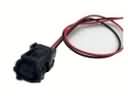 Chevrolet Venture ABS Wheel Speed Sensor Connector
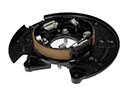 Chevrolet Venture Brake Backing Plate
 Chevrolet Venture Brake Booster
 Chevrolet Venture Brake Caliper Piston
 Chevrolet Venture Brake Calipers
 Chevrolet Venture Brake Drum
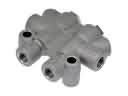 Chevrolet Venture Brake Proportioning Valve
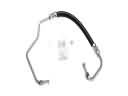 Chevrolet Venture Hydraulic Hose
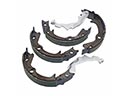 Chevrolet Venture Parking Brake Shoe
 Chevrolet Venture Wheel Hub
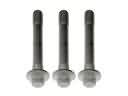 Chevrolet Venture Wheel Hub Bolt